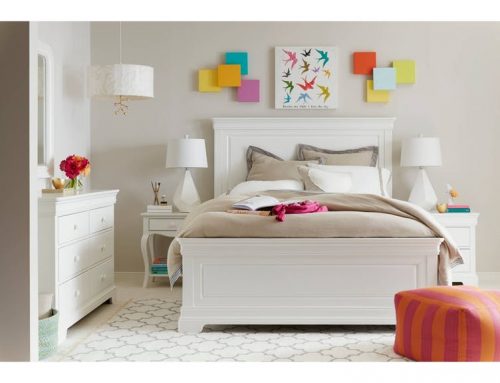
Does your child’s room need a makeover? Just like an adult bedroom, a child’s bedroom needs to be functional and a place they are comfortable retreating to at the end of the day. Children spend most of their time in their rooms. Apart from sleeping, they use their rooms for playing, doing their homework, and so on. For this reason, the way you decorate their room should be a reflection of their character and personality. In this post, we share the top 8 kids bedroom design ideas your children will fall in love with.
1. Have fun with the storage
Kids’ bedrooms need a lot of easily accessible storage solutions. For smaller children, kids storage furniture should be mini-sized, allowing them to reach their favorite toy or book easily. Their needs will be different once they grow older. For instance, they’ll want their space to look more stylish, especially when their friends come over.
When it comes to storage solutions for your children’s room, you can choose multi-purpose storage systems or mix and match different items. For smaller children, it makes sense to have several open shelves with baskets or bins where they can store their toys. Toys of the same nature should be stored in one bin. This makes it easy for your child to see where each toy goes once playtime is over.
2. Bunk it
In the past, bunk beds were only used to save on space and had little or no-frills. Today, there are stylish bunk beds complete with a chest of drawers or stairs that lead to the top. You can choose a bunk bed with an under-bed homework station or a play area. You can also have built-in bunks. Luckily, there are plenty of modern bunk designs in any kids furniture store.
3. Choose a color scheme that grows with the children
Choosing a color scheme for your child’s room is easy as it allows you to be creative and whimsical. As colors influence our behavior and mood, using bright or bold colors throughout your child’s room might not be the best strategy.
Warm colors will create an intimate environment that makes the bedroom space feel comfortable and inviting. However, use warm colors in moderation as there are hues that stimulate the mind. On the other hand, cool colors have a calming effect and make your kids’ room feel spacious and relaxing. However, over saturation of cool colors can make the bedroom feel cold and somber.
If your children are old enough to voice their opinions, ask them which colors they prefer. However, this does not mean that they’ll love the color they’ve chosen the net month or a year from now. Choose a neutral color scheme such as taupe or grey, which you can accessorize as they get older. Avoid high-contrast color palettes on the bedding or busy patterns on the wall as they’ll end up making your child feel energized rather than relaxed.
Using wall decals is an effective way of decorating your child’s bedroom, and it prevents you from repainting now and again.
4. Show off their pieces of artwork
Does your child like to paint, color, or take photos? Rather than buying prints to spruce up a neutral colored wall, frame their art pieces, and hang them to create a gallery wall. Apart from adding a pop of color to the space, your child is bound to feel proud of their work.
Working on a shoestring budget? Work with your child to create craft supplies that you can hang in their room. These come in handy if you are renting and therefore, you cannot paint your child’s room. For instance, you can string up some colorful bunting to add a bit of playfulness in the room. Washi tape is a great alternative to costly frames and is available in a wide range of sizes, colors, and patterns.
5. A chalkboard wall allows for more customization
Chalkboard paint would be a welcome addition to any child’s room. As children are forbidden to doodle on their bedroom walls, a chalkboard wall is a great way for kids to customize their bedroom. As what they draw is not permanent, a chalkboard allows for more versatility. It is also ideal if you are decorating your child’s room on a budget as you can DIY one.
6. Arrange the kids bedroom furniture wisely
Designing a kid’s bedroom can be rather difficult. In most cases, you have to work with limited space to store toys, school equipment, books, and clothes. You need to arrange the kids furniture in a way that maximizes the floor space. For instance, push pieces of furniture such as beds, cabinets, and desks against the wall. When designing the room, you need to consider whether the room is shared, the activities you would want it to accommodate, and the traffic flow. Try designing the room arrangement on paper rather than randomly moving pieces of furniture. Also, make sure you leave enough room for walkways.
7. Make the room cozy
Children love cuddling. For this reason, the kid’s bedroom should be full of items such as body pillows and stuffed animals. The blankets need to be soft to the touch and light. Therefore, you need to test-drive all bedding, rugs, and pillows before putting them in your child’s room. Family photos also have a way of making children feel cozy, safe, and relaxed.
8. Differentiate shared spaces
Most parents think that a shared kids’ bedroom means matching kids bedroom sets such as matching furniture and bedding. While some kids are comfortable with this arrangement, others prefer an individual style. In that case, you can ask them to pick out their preferred artwork, nightstands, lamps, and even bedding. You can choose to divide such as space by mounting a curtain rod on the ceiling or setting up a shelving unit or a dresser between the beds.
Final Thoughts
Childhood is fleeting, and before you realize it, your small child will be all grown and moving out. Make the most of their childhood years by making them as comfortable as possible with affordable kids furniture. Allow them to have a say when it comes to their rooms’ theme, color scheme, and furnishings. Involving them during their rooms’ makeover is a great way to bond, have fun, and make memories.