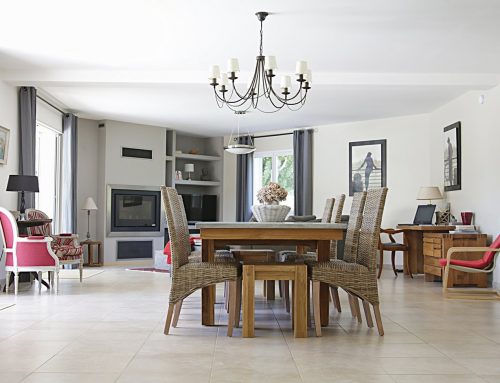
Most people focus on the carpentry, the furniture, the walls, and other décor aspects when decorating a home. One critical aspect that’s often overlooked is the lighting. Good lighting plays a major role in the livability and comfort of your indoor space. The lighting in your home changes its mood as well as the room’s perceived size. Suitable lighting appropriately placed transforms an ordinary room into a dynamic space oozing functionality and style. In this post, we discuss the top 7 lighting ideas for your home.
1. Make use of natural lighting as much as possible
The psychological and physical advantages of natural light are undisputed. For starters, it increases sustainability. Increasing your home’s exposure to natural light through energy-efficient windows and doors will create a happier, comfortable, healthier, and sustainable home. Natural light provides your home with a truer illumination sense compared to artificial lighting.
Natural lighting is also healthy. It reduces the production of harmful organisms such as mold and mildew. It helps ward off mood changes such as winter blues which are brought about by changes in the seasons. Do you work from home? Natural lighting is an effective way of increasing your productivity.
Homes with as much natural lighting as possible are bound to sell at a much higher value than those with little or without natural light.
2. Know your lighting options
One of the most common lighting mistakes homeowners make is using overhead lighting only. Lighting is most effective when it’s layered. Therefore, you have to know the three basic types of lighting.
Ambient or general lighting fills up the majority of your room and allows you to move about comfortably. It could be in the form of ceiling fixtures such as chandeleirs, wall-mounted fixtures, recessed lighting, and so on.
Task lights are meant to provide you with sufficient lighting when you are carrying out certain tasks. For example, table lamps are used for home office lighting while pendants can are installed above a kitchen island.
Accent lights are used to highlight a focal point. For instance, you could add track lights on wall art.
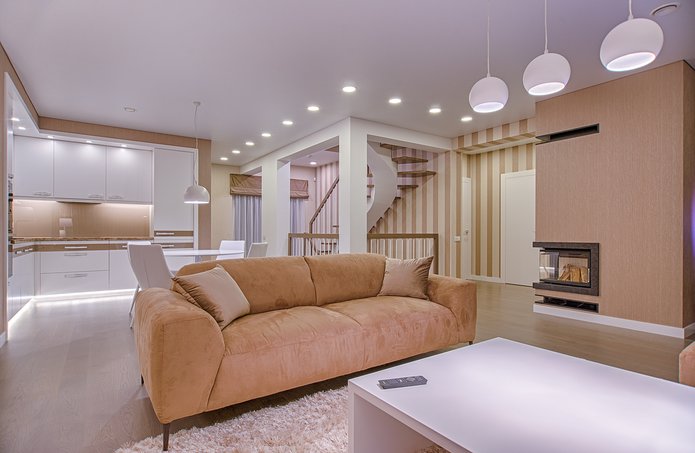
3. Consider the room’s function
What will you be using the space for? Is it a dining room? Kitchen? Living room? Or an entertainment room? For a kitchen, you might want to highlight focal points such as the dining area or kitchen island with overhead chandeliers or pendants. Under-cabinet lighting would be ideal accent lights.
In the living room, use layered lighting. For instance, you can use recessed lighting as well as a large overhead fixture which highlights the main sitting area. Use floor lamps to light up shadows or dark corners. Floor lamps are also ideal for home bar lighting.
Bedrooms normally have an overhead or wall lamps alongside table lamps placed on dressers or nightstands. For bathrooms, recessed lighting works best, but you could add task lights around a mirror to create a dramatic effect.
4. Know your bulbs
Being the source of light, the type of bulb you choose determines the kind of light it emits. Halogen lights are the closest you will get to natural light as they emit white light. Therefore, color tones within your home will appear sharper if you use halogen lights. They are quite energy-efficient.
Incandescent bulbs are the most common, perhaps because they have been around for decades. While they are quite warm and inviting, they are slowly getting phased out in favor of energy-efficient options.
Compact fluorescent lights are more or less like incandescent bulbs, but they could last up to 10 times longer. They emit inviting and color-corrected tones due to their high luminous efficiency.
LED bulbs are gaining popularity due to their energy-efficiency as well as the color varieties. They are mostly used for task lighting due to their direct light.
5. Consider the size of your lighting fixtures and aesthetics
Shopping for lighting fixtures can be challenging, most people make their choice based on the fixtures’ visual features such as the style and finish. While this is a good place to begin, another important element, which is often overlooked, is the fixture’s size.
One thing to remember in choosing your light fixture, you need one that’s big enough for your space but doesn’t look too big. When choosing an ambient light, measure your room’s length and width, add the two, and convert the total into inches to get the ideal size of your fixture.
Decisions to make with your kitchen island or dining table, measure their entire lengths and decide whether you’ll make do with two or three pendants. Should you choose two pendants, they should be large while three pendants will need to be smaller.
6. Do not shy away from dramatic colors for your shades
A lampshade protects your eyes from direct light and focuses or guides the light emitted based on your preferences. For instance, using lampshades on floor lamps helps focus the light downwards where it is needed.
Adding decorative elements such as lampshades sets the mood for your space. For instance, you could add colored shades in materials such as rattan or wicker. Apart from adding texture and depth to the room, this also adds to its character. You can also use the shades to make a fashion statement by making them the focal point in your room.
7. Use dimmers
Whether you are having a romantic dinner or planning to watch a movie as a family, having proper lighting sets the mood for any event. Dimmer switches help you regulate the amount of light your bulbs emit. Having the ability to lower or increase the room’s lighting depending on the current activity saves you energy and ultimately, money.
Lighting and how you set it up can make or break the rooms in your home. When your home is well lit, the light helps its design shine. When the lighting is poorly done, your home will look unwelcoming and grim no matter how well its design is. Follow the above home lighting ideas to take your home’s lighting to the next level. Do you have any more tips? We’d be happy to hear them.